Our capacity-building programmes strive to ensure that domestic workers occupy all levels of staffing, especially leadership roles. We conduct:
- Trade union education sessions
- Skill development trainings
- Structural strengthening meetings at Village, Disctric and Ex-co levels
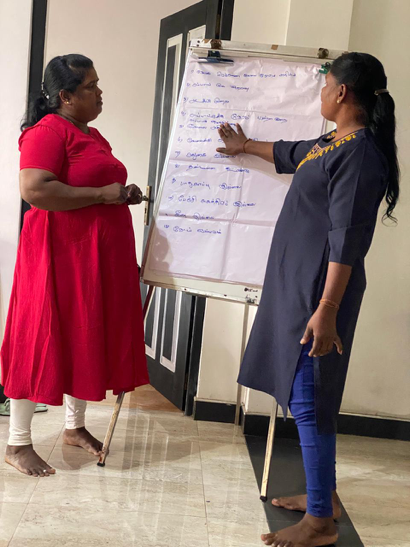
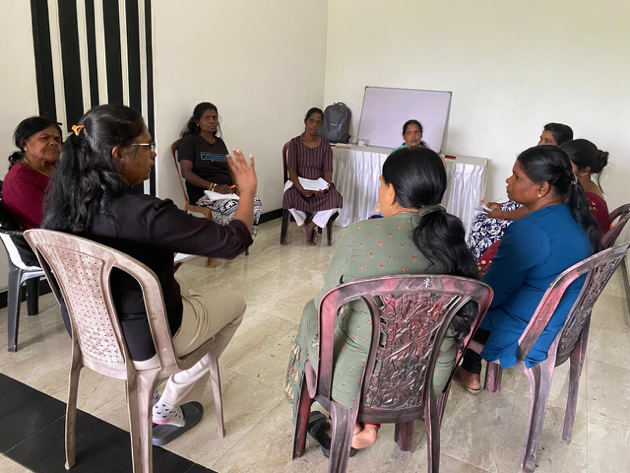
Developing worker leaders begins with a mapping exercise through which trained workers identify the areas in which potential/new worker-members reside. Following this, an orientation programme is held in the specific areas. This programme focuses on developing the idea that domestic workers, although unrecognized by law, are indeed workers who can be powerful when they come together. Such trainings make use of worker-friendly booklets that outline the basics of the worker-employer relationships- who are workers, what makes them workers, what decent work is, and other topics intended to mobilize these workers.
Establishing such ideas from the initial stages is key to the union’s successful functioning. Following this initial orientation, there are a range of training programmes, including those for Executive Committee members, a District Committee training programme and a Village Leaders training programme.
District Committee Members Training Programme
These training programmes focus on how to monitor district-level union developments, how to identify gaps, how to make district-based decisions, and how to plan and carry out campaigns.
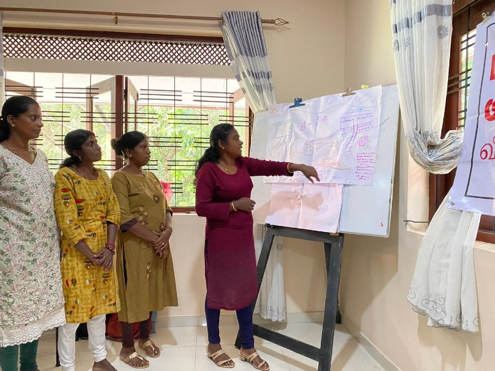
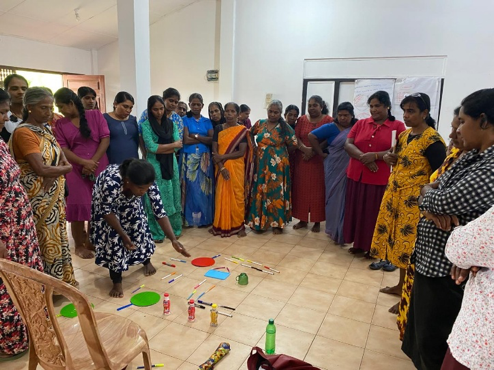
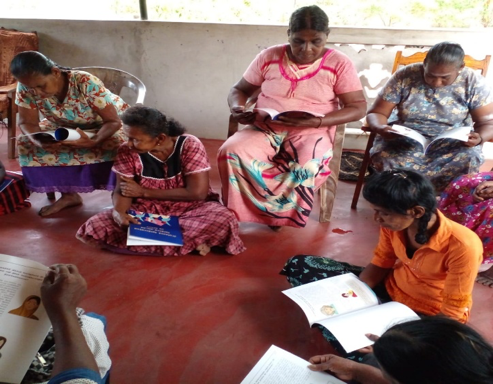
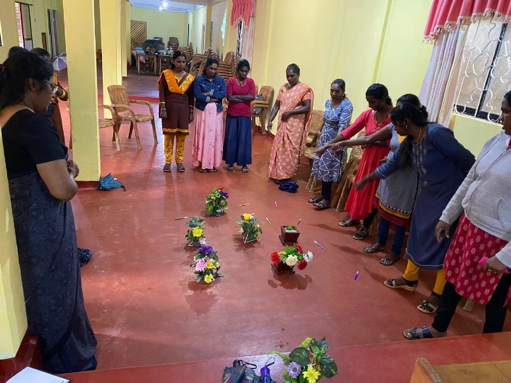
Village Leaders Training Programme
These training programmes focus on trade union education training for village leaders, developing knowledge and skills how to identify and analyze problems, and improving negotiation skills with employers, policy makers, and other stakeholders.
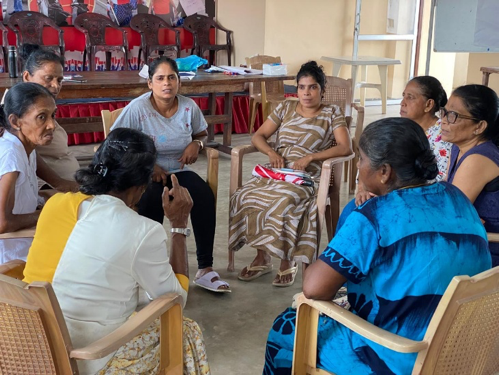
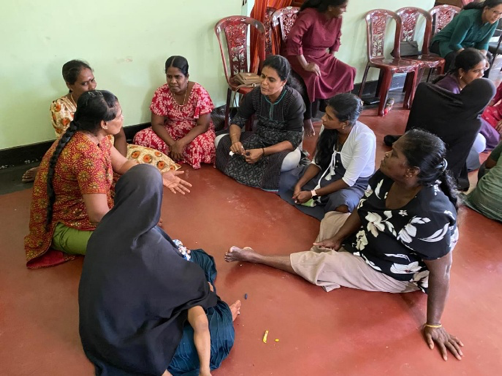
Executive Committee Members Training Programme
These training programmes focus on how to collectively make decisions, how to direct the union towards vision, and how to develop issue-based knowledge and skills on issues of gender, class and ethnicity.
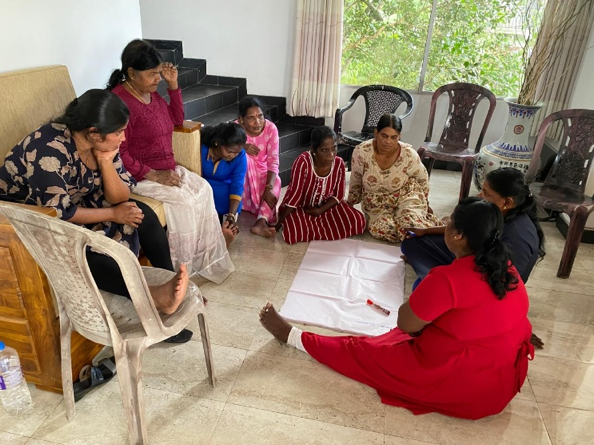
Annual General Meetings
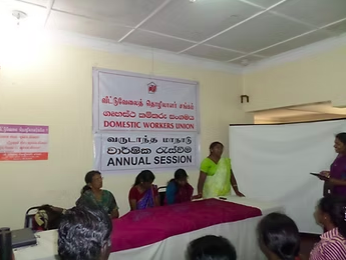
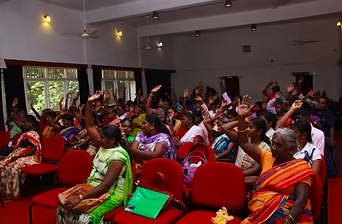
During Annual General Meetings, domestic workers and administrative staff discuss amendments to the constitution and elect Executive Committee members for the following year. The different levels of training that the workers undergo throughout the year prepares them for such meetings, where they are able to participate in discussions and plan-making.
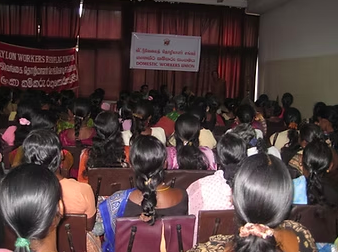
 Domestic Workers' Union of Sri Lanka